
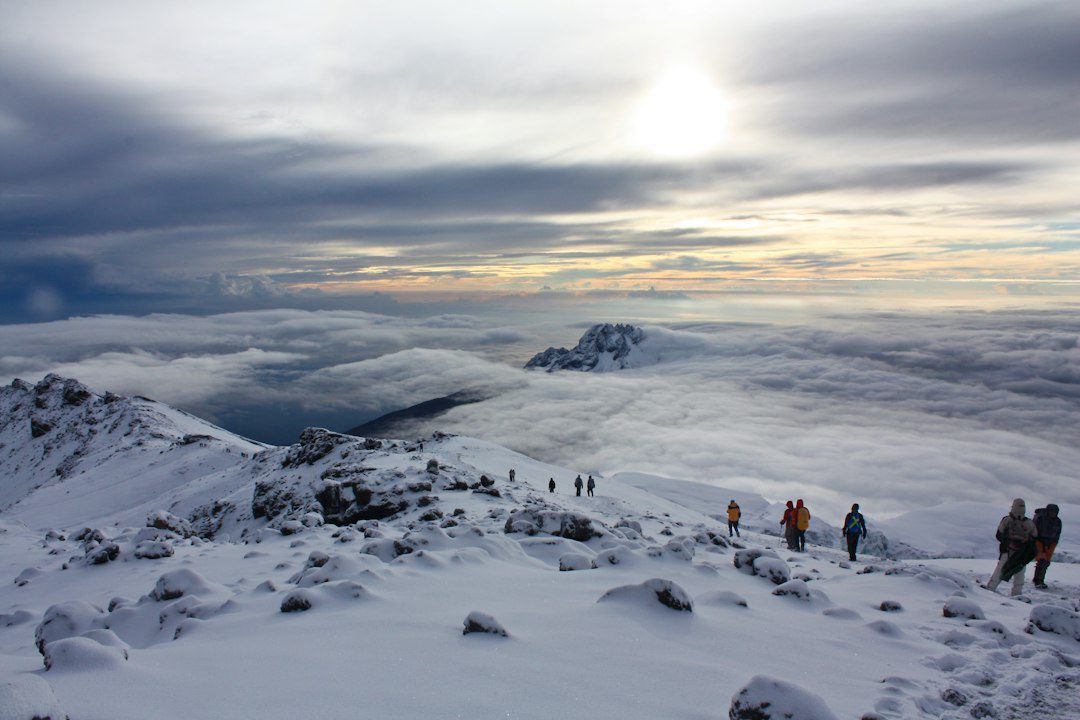
Machame vs Lemosho Route: The Kilimanjaro Comparison That Shapes Your Summit Odds
Your Machame vs Lemosho route Kilimanjaro comparison starts with one factor above all others: time on the mountain. An 8-day Lemosho itinerary gives you one to two extra acclimatisation days compared with a 6- or 7-day Machame climb, and its first night’s camp sits lower on the mountain than Machame’s. That extra time at altitude is the core reason operator-reported summit success on Lemosho runs roughly 85-90% on the 8-day version, while Machame on a 6-7 day itinerary lands closer to 75-80%. Tanzania National Parks (TANAPA) does not publish official summit success rates, so these figures come from operator tracking and independent research, but the gap between the two routes is consistent across sources. Both routes deliver you to the same summit path via Stella Point. How you get there, and how your body copes along the way, changes everything.
If you are a first-time trekker weighing the two, the decision really comes down to three questions: how much acclimatisation your body needs, how much solitude you want in the first few days, and how much you are willing to spend for an extra day or two on the mountain.
Acclimatisation Profiles: Days, Distances and Altitude
Lemosho’s advantage is not that it starts lower at the gate, it is that it spreads the altitude gain over more days. You start at Londorossi Gate on the western side at roughly 2,100m, sleep your first night at Big Tree Camp (around 2,650m), then cross the Shira Plateau over two or three gradual days before reaching Lava Tower at approximately 4,600m. Machame compresses the same overall ascent into fewer days. You start at Machame Gate (around 1,800m) and climb straight to Machame Camp at 3,010m on day one, a 1,200m gain in a single afternoon. By the time both routes meet near Lava Tower, the Lemosho climber has had two or three more nights to adapt.

The 8-day Lemosho inserts a dedicated acclimatisation day crossing the Shira Plateau, splitting what would be one long early stage into two shorter ones. The 7-day Machame relies on the “climb high, sleep low” day at Lava Tower (day 3) to do most of the acclimatisation work in a single push. Both use the same technique, but Lemosho gives your body more repetitions of it before the summit night.
| Factor | Lemosho (8-day) | Machame (7-day) |
|---|---|---|
| Typical duration | 8 days | 7 days (6-day variant available) |
| Total distance | ~70 km | ~62 km |
| Start gate elevation | Londorossi Gate, ~2,100m | Machame Gate, ~1,800m |
| First night’s camp | Big Tree Camp, ~2,650m | Machame Camp, ~3,010m |
| Key acclimatisation day | Day 4 (Lava Tower, ~4,600m) | Day 3 (Lava Tower, ~4,630m) |
| Highest camp before summit | Barafu Camp, ~4,673m | Barafu Camp, ~4,673m |
| Est. summit success rate | 85-90% (operator-reported) | 75-80% (operator-reported) |
| Where routes converge | Near Barranco Camp | Near Barranco Camp |
The Days Altitude Sickness Hits Hardest
The days where altitude symptoms typically strike differ by route because of where the big elevation jumps fall. On Machame, day 3 is the pressure point: you climb from Shira 2 Camp (3,850m) up to Lava Tower (4,630m) for lunch, then descend to Barranco Camp (3,960m). Most climbers feel their first real symptoms at Lava Tower, a dull headache and reduced appetite that usually ease overnight. On Lemosho, that same Lava Tower day falls on day 4, by which point you have already spent two nights above 3,500m on the Shira Plateau, so the stimulus is gentler and symptoms are typically milder.
On both routes, the summit push from Barafu Camp is where acute mountain sickness (AMS) is most common and most severe. You wake around midnight, climb frozen scree switchbacks by headlamp, and gain over 1,200m to reach Stella Point on the crater rim. A study published in High Altitude Medicine and Biology tracking trekkers on a 6-day Machame itinerary found that 86% showed symptoms of AMS on summit day, and 61% showed severe symptoms. The longer acclimatisation on an 8-day Lemosho does not eliminate summit-day risk, but it gives your body significantly more preparation before you hit that final push.
Scenery Face-Off: What You’ll Actually See Each Day

Both routes pass through the same five climate zones, from montane rainforest to alpine desert to arctic summit, and both share the same dramatic upper mountain from Lava Tower onwards. The difference lives entirely in the first two or three days, before the trails merge near Barranco.
Lemosho: The Remote Western Approach
Lemosho’s opening days are its signature. You start in thick montane rainforest on Kilimanjaro’s western flank, where colobus and blue monkeys are more commonly spotted than on the busier southern side. The forest is denser, wilder and quieter. Day 2 breaks out onto the Shira Plateau, a vast alpine caldera that stretches for kilometres at around 3,800m, with Kibo’s summit massif rising dramatically to the east. Sunsets on the Shira Plateau are widely rated among the finest on the mountain: the sky turns orange and gold as the glaciers catch the last light. If you want a wilderness feel and panoramic big-sky scenery, Lemosho delivers it before the trails converge.
Machame: The Steeper, Busier Southern Traverse
Machame’s rainforest stretch is shorter and climbs more steeply, but it is equally lush. The scenery becomes increasingly dramatic as you break out of the forest into heath and moorland, then the Barranco Valley, a glacier-carved gorge with towering cliff walls. The Barranco Wall scramble on day 4 is the route’s most famous feature: roughly 250m of hands-on scrambling up a rocky ridge that feels exposed but needs no ropes. From the top, you get sweeping views across the Southern Icefields. Machame packs more vertical, dramatic scenery into fewer days, but you share it with more people.
Crowds, Campsites and the Social Experience
Machame is the single most popular route on Kilimanjaro, taking roughly 35-50% of all climbers depending on the season. In peak months (late June through October, and the January to early March window), Machame Camp and Shira 2 can hold a lot of tents, and the Barranco Wall can back up in the morning as groups queue at narrow scrambling sections. If you climb in July or August, expect a busy trail from day one.

Lemosho starts from a different gate and approaches from the west, so its first two or three days are significantly quieter. You share the trail with far fewer trekking parties until you reach the Shira Plateau, where Lemosho and the Shira route merge. After Barranco Camp, both Lemosho and Machame climbers share the same trail, the same camps at Karanga and Barafu, and the same summit night. Neither route offers solitude on the upper mountain. The solitude advantage is real, but it lives in the first 48 to 72 hours.
For some trekkers, the social energy of Machame is a plus: more groups, more campfire chatter, more shared momentum on summit night. For others, particularly those who want a quieter, more reflective experience early in the climb, Lemosho’s remote opening days are worth paying for.
Cost Comparison: Operators, Days and What’s Included
Lemosho costs more than Machame for a straightforward reason: more days on the mountain means more park fees, more crew wages and more food. Park fees alone account for roughly $1,097 of any 8-day Lemosho quote (including the small western forest fee) versus about $956 for a 7-day Machame, based on the TANAPA published tariff plus 18% VAT. Like-for-like with the same operator, expect Lemosho to run roughly $500-600 more than a 7-day Machame.
Operator pricing varies enormously. For a 7-day Machame in 2026, mid-range operators typically charge around $2,000 to $3,000 per person, while 8-day Lemosho runs from about $2,300 to $3,500. Budget operators advertise lower, but subtract the fixed park fees and you can see how much is actually left to run your climb: crew pay, food, tents, safety equipment and guide ratios. A very cheap quote often means fewer crew, lower wages, thinner safety provisions or both. Always get a written quote that itemises what is included, and confirm whether hotel nights and transfers are part of the price.
If budget is the deciding factor, the 7-day Machame offers the best balance of cost and acclimatisation. If you can stretch to Lemosho’s 8-day price, the extra day buys a real improvement in summit odds and a quieter first half of the trek.
Which Route Should You Pick? A Clear Verdict
| Category | Winner | Why |
|---|---|---|
| Best for first-timers | Lemosho (8-day) | Highest success rate, gradual ascent, extra acclimatisation day, lower first camp |
| Best scenery | Lemosho | Shira Plateau panoramas plus all the shared upper-mountain drama |
| Best for solitude | Lemosho | Quiet western approach for the first 2-3 days before trails merge |
| Best value | Machame (7-day) | Shorter, cheaper, still a strong acclimatisation profile with the Lava Tower day |
| Best if altitude-sensitive | Lemosho (8-day) | Most gradual profile of the two, most time to adapt before the summit push |
For most first-time trekkers, the 8-day Lemosho is the better choice. It gives you the highest realistic chance of summiting, the quietest start, and the most scenic opening days on the mountain. The trade-off is cost and trip length. If your budget or schedule points you towards Machame, pick the 7-day version, not the 6-day. The extra night at Karanga Camp on the 7-day itinerary gives your body a critical rest day before the summit push, and success rates jump significantly compared with the compressed 6-day variant.
What to Pack Once You’ve Chosen Your Route
Both Lemosho and Machame are full-camping routes: you sleep in tents carried and pitched by your crew, so your personal gear list is nearly identical. The differences are marginal but worth noting.
Shared essentials for both routes
- A four-season sleeping bag rated to at least -15C. Nights at Barafu Camp (4,673m) drop well below freezing.
- Broken-in leather or synthetic hiking boots with ankle support. Do not arrive with new boots.
- Layered clothing: a moisture-wicking base layer, an insulating mid-layer, and a windproof, waterproof shell. Add a down jacket for summit night.
- A headlamp with spare batteries. Summit night starts around midnight and lasts 6-8 hours.
- Trekking poles. They save your knees on the long descent from the summit and help on the Barranco Wall scramble.
- A hydration system or water bottles. Staying hydrated is one of the most effective things you can do to reduce altitude symptoms.
Route-specific notes
On Lemosho, the extra days mean more time in the alpine desert zone, so pack enough base layers and socks for a longer trip. The Shira Plateau is exposed and windy, so a good shell jacket matters more here than on the lower forest days. On Machame, day 1 is a steep, often muddy climb through rainforest to 3,000m, so waterproof gear and gaiters earn their keep immediately. The Barranco Wall scramble requires you to stash trekking poles in or on your pack, so make sure they are detachable and secure.
Whichever route you choose, travel insurance that covers high-altitude trekking to 6,000m is essential. Standard travel policies often exclude peaks above 3,000m or 4,000m, and helicopter evacuation from Kilimanjaro is a separate cost from your operator’s rescue fee. Confirm your policy explicitly covers altitude trekking and emergency evacuation before you fly.
Frequently Asked Questions
Which is harder, Machame or Lemosho?
Machame is steeper and more demanding in the first two days, with a 1,200m gain on day 1 alone. Lemosho spreads the same overall ascent over more days, making it physically easier overall. Neither is technical, but Machame’s compressed schedule puts more strain on your body early in the climb.
Can a beginner climb the Machame route?
Yes. The 7-day Machame is a viable choice for fit beginners with no prior high-altitude experience, and success rates run around 75-80% on the 7-day version. Choose the 7-day, not the 6-day, to give your body the extra night at Karanga Camp. The 6-day variant drops success rates significantly and is not recommended for first-timers.
How much more does Lemosho cost than Machame?
Expect to pay roughly $500-600 more for an 8-day Lemosho compared with a 7-day Machame, with the same operator. Park fees account for about $140 of that difference, with the rest going to an extra day of crew wages, food and supplies.
Do Machame and Lemosho use the same summit path?
Yes. Both routes converge near Barranco Camp and share the same trail from there: Karanga Camp, Barafu Camp, the midnight summit push to Stella Point and Uhuru Peak, and the descent via the Mweka trail. Everything that differs happens in the first two or three days.
When does altitude sickness hit hardest on each route?
On Machame, day 3 (the Lava Tower acclimatisation day, reaching 4,630m) is where most trekkers first feel symptoms, and the summit push is where AMS is most severe. On Lemosho, the equivalent Lava Tower day falls on day 4, giving you two extra nights of acclimatisation first. On both routes, the summit night from Barafu Camp is the highest-risk period for altitude illness.
Leave a Reply