
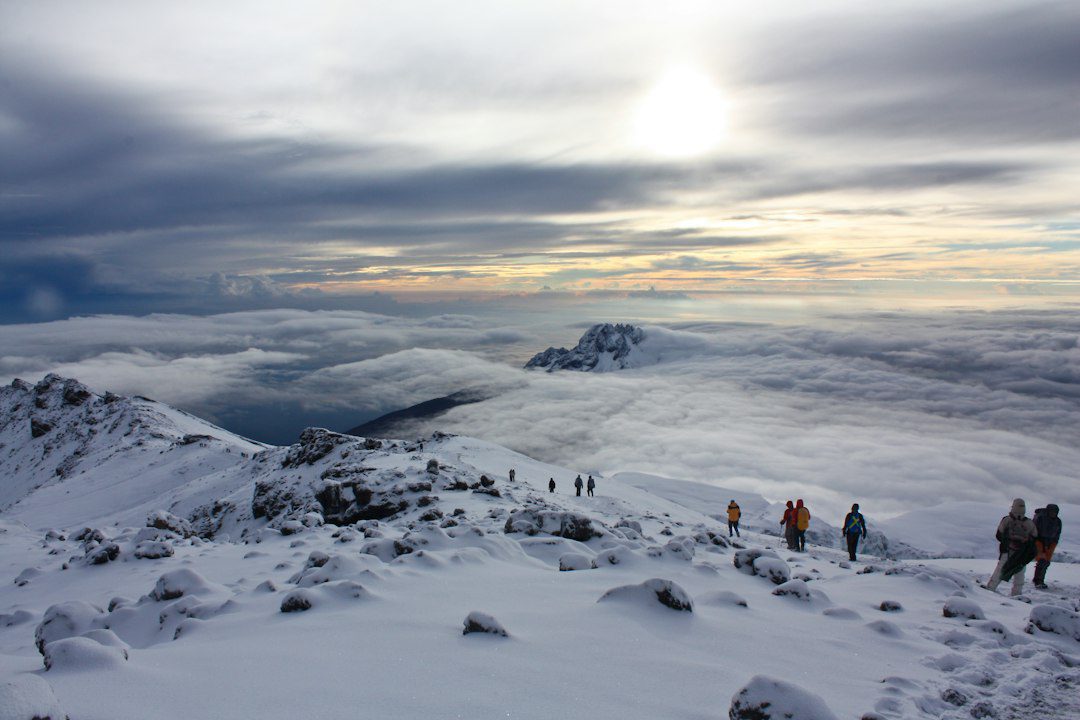
The single biggest decision on a Kilimanjaro climb is how many days you spend on the mountain. The most recent official figures from Kilimanjaro National Park, published in 2006 and still the most authoritative data available, put summit success at 44% on 6-day routes and 85% on 8-day routes. More recent operator tracking paints a similar picture: Kilimania Adventure, which has logged over 1,247 guided ascents between 2019 and 2025, reports success rates of 67% on 6-day itineraries, 82% on 7-day, and 93% on 8-day versions of the same Lemosho route. The pattern is consistent across every source: every extra day on the mountain buys you a meaningful jump in your chances of standing on Uhuru Peak at 5,895m.
Why Route Choice Makes or Breaks Your Summit
Route choice is not about which trail is prettiest or which has the best Instagram potential. It is about acclimatisation: how gradually your body is allowed to adapt to having roughly half the oxygen it gets at sea level. The routes that spread the altitude gain over more days, with built-in “climb high, sleep low” acclimatisation stages, give your body time to produce extra red blood cells and adjust your breathing. The routes that compress the same overall ascent into fewer days do not.
The Machame vs Lemosho comparison we have written elsewhere on this site goes deep on the two most popular routes, but the principle applies across the board. Marangu, the cheapest and shortest route, has the lowest success rates because it offers the least acclimatisation. The Northern Circuit, the longest and most expensive route, has the highest because it gives you nine days to adapt. You are choosing between spending more time and money upfront, or gambling on a shorter itinerary where your body may simply not be ready.
Here is the honest framing: there is no route on Kilimanjaro that is technically difficult. No ropes, no crampons, no ice axes. The challenge is entirely physiological. Your route and day count determine how much physiological stress your body absorbs before the summit push. That is the whole game.
Kilimanjaro Routes Compared: Distance, Days & Difficulty

Four routes account for the vast majority of Kilimanjaro ascents. Each has a distinct character, a different acclimatisation profile, and a different price point. Here is how they stack up.
| Route | Typical Days | Distance | Start Elevation | First Night Camp | Difficulty | Est. Success Rate | Accommodation |
|---|---|---|---|---|---|---|---|
| Lemosho | 7-8 | ~70 km | ~2,100m (Londorossi Gate) | ~2,650m (Big Tree Camp) | Moderate | 82% (7-day) / 93% (8-day) | Camping |
| Machame | 6-7 | ~62 km | ~1,800m (Machame Gate) | ~3,010m (Machame Camp) | Moderate-Hard | ~50% (6-day) / ~70% (7-day) | Camping |
| Northern Circuit | 8-9 | ~98 km | ~2,100m (Londorossi Gate) | ~2,820m (Mti Mkubwa) | Moderate | ~95% | Camping |
| Marangu | 5-6 | ~37 km (one-way) | ~1,860m (Marangu Gate) | ~2,700m (Mandara Hut) | Moderate (but fast ascent) | ~50-65% (5-day) / ~70-80% (6-day) | Huts |
Success rate figures are operator-reported estimates, not independently audited statistics. Kilimanjaro National Park has not published updated summit success data since 2006, so all current figures come from operator tracking and independent research. Treat them as directional, not exact. The direction is what matters: more days equals higher success, and the gap is large.
Lemosho: The Best All-Rounder for First-Timers
Lemosho approaches from the west, starting at Londorossi Gate at roughly 2,100m. The first night is at Big Tree Camp, around 2,650m, which is lower than Machame’s first camp. Over the next several days you cross the Shira Plateau, a vast alpine caldera at around 3,800m, before reaching Lava Tower at approximately 4,600m. The 8-day version inserts a dedicated acclimatisation day on the Shira Plateau, splitting one long stage into two shorter ones and giving your body extra nights above 3,500m before the summit push.
Lemosho’s first two to three days are significantly quieter than Machame’s, since far fewer groups start from the western gate. After Barranco Camp, Lemosho and Machame share the same trail, the same camps at Karanga and Barafu, and the same summit night. The solitude advantage is real but lives in the first 48 to 72 hours. For most first-time trekkers, the 8-day Lemosho is the strongest choice: highest realistic success rate, gradual ascent, and the most scenic opening days on the mountain.
Machame: Steeper, Busier, Cheaper
Machame is the single most popular route, taking roughly 35-50% of all climbers depending on the season. It starts at Machame Gate, around 1,800m, and climbs straight to Machame Camp at 3,010m on day one: a 1,200m gain in a single afternoon. That is a steeper, more demanding start than Lemosho, and it compresses the acclimatisation window. The 7-day version adds a night at Karanga Camp that the 6-day skips, and that extra night is where the success rate jumps from roughly 50% to around 70%.
Machame’s signature feature is the Barranco Wall scramble on day 4: roughly 250m of hands-on scrambling up a rocky ridge that feels exposed but needs no ropes. In peak season (July-August, January-February), the wall can back up as groups queue at narrow sections. If budget or schedule points you towards Machame, pick the 7-day, not the 6-day. The 6-day variant is a poor choice for first-time altitude trekkers.
Northern Circuit: The Long, Quiet, High-Success Option
The Northern Circuit is Kilimanjaro’s newest official route, opened in the early 2010s. It shares Lemosho’s western start at Londorossi Gate but instead of cutting south after the Shira Plateau, it continues clockwise around the mountain’s remote northern slopes, facing Kenya, before curving back to approach the summit from the northeast via School Hut at 4,750m. At roughly 98km over 9 days, it is the longest route on the mountain, and the extra distance is spent almost entirely on acclimatisation: more nights at altitude, more gradual elevation gain, and a genuinely restful pace before the summit push.
It is also the quietest route. Very few climbers choose it because it costs more and takes longer, which means the northern slopes are nearly empty. The trade-off is straightforward: you pay more and spend more time away from work, but you get the highest realistic summit odds (around 95% per operator tracking) and genuine solitude on the trail. If you have the time and budget, and especially if you are over 50 or have a history of altitude sickness, the Northern Circuit is the safest bet on the mountain.
Marangu: Cheap, Fast, and the Lowest Odds
Marangu is the oldest route and the only one with hut accommodation instead of tents. You sleep in shared dormitory buildings at Mandara Hut (2,700m), Horombo Hut (3,720m), and Kibo Hut (4,700m). No private rooms exist at any price; bed allocation is first-come, first-served, and you may share with climbers from other operators. The huts offer a real advantage in heavy rain or hard freeze, but the social cost of shared dorms after four to six days of building fatigue is something climbers rarely anticipate.
Marangu’s problem is not the summit night, which is physiologically similar to what Machame and Lemosho climbers face. The problem is everything before it. The 5-day version has no “climb high, sleep low” acclimatisation day at all. You ascend in a straight line and reach Kibo Hut at 4,700m with only two nights below 4,000m to prepare for a push to 5,895m. Success rates run 50-65% on the 5-day version. The 6-day version adds an extra night at Horombo, which lifts success to roughly 70-80%, but even that trails the longer camping routes. If you choose Marangu, take the 6-day option. The 5-day is a gamble.
What You’ll Actually Pay: Operator Tiers Explained
Kilimanjaro is not a cheap climb, and the price you pay reveals a lot about what happens on the mountain. Park fees alone are fixed: roughly $1,097 for an 8-day Lemosho and $956 for a 7-day Machame, based on the TANAPA published tariff plus 18% VAT. Everything above that pays for crew wages, food, tents, safety equipment, and guide ratios. A very cheap quote often means fewer crew, lower wages, thinner safety provisions, or all three.
Based on operator prices checked in October 2026, here are the three tiers you will encounter, per person, excluding international flights, visas, insurance, and gear:
| Tier | USD (per person) | GBP (per person) | What You Get | The Trade-Off |
|---|---|---|---|---|
| Budget | $1,500 – $2,200 | £1,200 – £1,750 | Park fees (sometimes), basic food, shared tents, large groups (15+) | Underpaid porters, no supplemental oxygen or medical kit, rushed itineraries, basic tents |
| Mid-range | $2,200 – $3,500 | £1,750 – £2,800 | All park fees, decent food, trained and fairly treated guides, quality tents | Quality and ethics without excess. The sweet spot for most climbers |
| Premium | $3,500 – $6,000+ | £2,800 – £4,800+ | Small groups (8 or fewer), supplemental oxygen, private campsites, high crew-to-climber ratios, gender-separated toilets | Justified for private trips, solo travel, or maximum support |
The mid-range is where most quality climbs sit. Published prices for a 7-day Machame run from about $1,500 to $4,990, and for an 8-day Lemosho from about $1,800 to over $6,000. Most established operators sit between $2,500 and $3,500. The budget tier is tempting, but subtract the fixed park fees and you can see how little is left to run the climb. The question to ask any operator is: after park fees, how much per day is left for crew pay, food, and safety equipment? If that number is low, someone on the mountain is paying for it.
Summit Night: What Nobody Tells You

Summit night is the part of the Kilimanjaro climb that separates the people who have done their homework from the people who have not. Here is what it actually involves.
You wake at around 11pm or midnight. Your departure camp is either Barafu Camp at 4,673m (Machame, Lemosho, Rongai) or Kibo Hut at 4,700m (Marangu). You climb approximately 1,200m of vertical gain over roughly 5km of frozen scree and volcanic ash to reach Uhuru Peak at 5,895m. The ascent takes 5 to 9 hours depending on your pace. You arrive at Stella Point, on the crater rim at 5,756m, at approximately sunrise, then push the final 139m to Uhuru Peak in full daylight. Then you descend for 6 to 8 hours to Mweka Camp at 3,100m. Total summit day: 16 to 18 hours of continuous movement.
The temperature in the summit zone typically ranges from -10°C to -20°C, with wind chill making it feel considerably colder before dawn. At Uhuru Peak, the air temperature in July and August can hit -20°C or below. Your sleeping bag should be rated to at least -15°C, and the UIAA recommends a -20°C rating. Layering is not optional. It is the difference between summiting and turning back.
The Nausea Question
Here is what catches people off guard: it is not the cold that turns most climbers around, it is the gastrointestinal distress. Above 5,000m, your body is receiving roughly half the oxygen it gets at sea level, and your digestive system is the first non-essential system to be compromised. Nausea, dry heaving, and loss of appetite are normal and common. They do not necessarily mean you need to descend. They mean you are at altitude.
A study published in High Altitude Medicine and Biology tracking trekkers on a 6-day Machame itinerary found that 86% showed symptoms of acute mountain sickness on summit day, and 61% showed severe symptoms. A separate retrospective study of 917 climbers over a 10-year period found that 70% experienced at least one symptom of high altitude illness (headache, nausea, vomiting, diarrhea, or loss of appetite) during their trek. These are not fringe cases. This is the normal experience on a short itinerary.
The Pace
Your guide will repeat “pole, pole” throughout the climb. It means “slowly, slowly” in Swahili, and on summit night it is the most important word on the mountain. The pace is agonisingly slow, slower than you think you need to go. You take a step, pause, breathe. A step, pause, breathe. This is not because the guides are being cautious. It is because going faster at that altitude accelerates the onset of AMS. Climbers who push the pace on summit night are the ones who turn back at Stella Point.
When to Turn Back
Headaches are almost universal above 5,000m. A throbbing headache by itself is not a reason to descend. The question your guide will ask is whether it responds to water and rest. A headache that worsens with altitude gain, combined with other symptoms, is a warning. Loss of coordination (ataxia), confusion, inability to walk a straight line, severe vomiting, blue lips or fingertips, and persistent chest pain are signs of severe altitude sickness, specifically HACE (high altitude cerebral edema) or HAPE (high altitude pulmonary edema). These require immediate descent. No negotiation. A rapid descent of 300 to 500m resolves most serious symptoms within hours.
Altitude Sickness: Prevention, Diamox & When to Descend
Acute mountain sickness (AMS) is the single biggest risk on a Kilimanjaro climb, and it is entirely physiological. The CDC Yellow Book notes that more than 50% of travellers develop some form of AMS on ascent to 3,500m, and almost all do if they ascend rapidly to 5,000m. On Kilimanjaro, where most itineraries reach 5,000m within 5 to 7 days, AMS is not a rare complication. It is the default experience, and the question is how severe it gets and whether you manage it or ignore it.
Diamox Is Not Cheating
Acetazolamide, sold under the brand name Diamox, is the most widely studied and effective medication for preventing AMS. The CDC recommends 125mg twice daily for prophylaxis, starting the day before ascent and continuing for the first two days at altitude (or longer if ascent continues). A 2021 meta-analysis of 22 randomised controlled trials found that acetazolamide at 125mg, 250mg, and 375mg twice daily all significantly reduced AMS incidence compared to placebo, with a relative risk of 0.51, meaning it roughly halved the chance of developing AMS. The CDC strongly recommends acetazolamide prophylaxis for rapid ascents such as Kilimanjaro in under 7 days.
Despite this, a study published in the Journal of Travel Medicine found that only 26% of UK trekking companies operating on Kilimanjaro provided any advice on prophylactic acetazolamide on their websites. Many climbers arrive on the mountain having never heard of it, or believing it is “cheating” or that it masks symptoms. It does neither. Diamox works by inducing bicarbonate diuresis, which stimulates ventilation and increases blood oxygenation, especially during sleep. The CDC explains that it speeds up the acclimatisation process that normally takes 3 to 5 days down to about 1 day. It does not hide symptoms. It helps your body adapt faster.
Talk to your doctor or a travel health clinic before your climb. Side effects include tingling in the fingers and toes (paresthesia) and increased urination, both of which are harmless and temporary. It is a sulfa-derived drug, so anyone with a sulfa allergy needs to discuss alternatives with their doctor.
The Hierarchy of Altitude Illness
AMS exists on a spectrum. Mild to moderate AMS includes headache, nausea, loss of appetite, fatigue, dizziness, and poor sleep. These are common, manageable, and not by themselves a reason to descend. Severe AMS progresses to HACE (fluid on the brain) or HAPE (fluid on the lungs). HACE symptoms include loss of coordination, confusion, and altered consciousness. HAPE symptoms include shortness of breath at rest, a tight or congested feeling in the chest, and coughing (sometimes pink frothy sputum). Both are medical emergencies that require immediate descent. A 2022 prospective cohort study published in the Journal of Travel Medicine, tracking 1,237 hikers on Kilimanjaro, found that 8.6% developed severe altitude illness symptoms and 1.1% required hospitalisation.
What Actually Helps
Beyond Diamox, three things meaningfully reduce altitude risk on Kilimanjaro: choosing a longer itinerary, climbing high and sleeping low (which all the camping routes do), and staying aggressively hydrated. Dehydration amplifies AMS symptoms and is easy to miss because you feel less thirsty at altitude and the dry air increases fluid loss through breathing. Drink more than you think you need. Eat even when you do not want to, because your body is burning calories to keep you warm and adapt to the altitude. And if your guide says you need to descend, descend. The mountain is not going anywhere.
How Fit Do You Really Need to Be?

You do not need to be an elite athlete to climb Kilimanjaro. You need to be able to hike for 4 to 8 hours a day for a week, carrying a daypack of roughly 6 to 8 kg, at altitude. The benchmark most operators use is the ability to gain roughly 300 vertical metres per hour with your pack. Most people need 4 to 6 months of focused training to get there.
Here is the thing that surprises fit people: cardiovascular fitness does not protect you from altitude sickness. Marathon runners and triathletes struggle on Kilimanjaro just as often as weekend hikers, because altitude adaptation is physiological, not something you can train for at sea level. What fitness does is make the trek more manageable, reduce fatigue, and give you the stamina for a 16-hour summit day. It buys you resilience. It does not buy immunity from AMS.
A Practical Training Plan
Start 4 to 6 months before your climb. Make uphill hiking with a pack your primary training activity. Aim for 4 to 5 aerobic sessions per week of 40 to 60 minutes (running, cycling, stair climbing, or elliptical all work), plus 2 to 3 strength sessions focusing on legs and core: squats, lunges, step-ups, calf raises. Add a long hike every other weekend, progressively increasing distance, elevation gain, and pack weight. A good target a month out: gaining 900m of elevation in about 3 hours with a 10 to 12 kg pack. Back-to-back weekend hikes are the best rehearsal for consecutive days on the mountain. Taper in the final two weeks: shorter, lower-intensity workouts and lots of stretching.
Break in your boots before you arrive. This is not negotiable. Wear them on every training hike, with the socks and insoles you will use on the mountain. New boots on day one of a Kilimanjaro climb will cost you the summit.
Choosing an Operator: Questions to Ask
Your operator is the single most important logistical decision after route choice. A good operator keeps you safe, feeds you well, pays its crew fairly, and carries proper emergency equipment. A bad one puts you at risk and exploits its staff. Here are the questions that separate the two.
- What is your guide-to-climber ratio? A ratio of 1 guide per 2 to 3 climbers is standard for quality operators. Higher ratios mean less attention on summit night when it matters most.
- Do you carry supplemental oxygen and a pulse oximeter? If the answer is no, walk away.
- Are you on the KPAP (Kilimanjaro Porters Assistance Project) partner register? This is the independent porter-welfare register maintained by IMEC. Operators on the list commit to fair wages and proper equipment for their crew.
- What is the emergency evacuation plan? How quickly can a climber be descended, and what happens if someone needs hospital treatment in Moshi or Arusha?
- After subtracting park fees, how much per day is left for crew pay, food, and equipment? A reputable operator will be transparent about this. A very low number means corners are being cut somewhere.
- Does the price include hotel nights before and after the climb, airport transfers, and tipping guidance? Get a written quote that itemises what is included.
- What is your summit success rate, and how do you define “summit”? Some operators count Stella Point or Gilman’s Point as a summit. Ask specifically about Uhuru Peak at 5,895m.
If you are ready to start researching flights and accommodation for your trip, use the search tools on Worldwide Travel to compare options for getting to Kilimanjaro International Airport (JRO) and finding hotels in Moshi or Arusha for your pre-climb night.
Frequently Asked Questions
What is the success rate on a 6-day Kilimanjaro climb?
The most recent official figures from Kilimanjaro National Park (2006) put 6-day route success at 44%. More recent operator tracking reports 50-67% on 6-day itineraries, depending on the route and operator. In contrast, 7-day routes average 64-82% and 8-day routes 85-93%. Every extra day on the mountain significantly improves your chances of reaching Uhuru Peak.
Should I take Diamox for a Kilimanjaro climb?
The CDC strongly recommends acetazolamide (Diamox) prophylaxis for rapid ascents like Kilimanjaro in under 7 days. The standard dose is 125mg twice daily, starting the day before ascent. A 2021 meta-analysis found it roughly halves the risk of developing AMS. It is not cheating; it speeds up the acclimatisation process. Talk to your doctor or a travel health clinic before your climb.
How cold is summit night on Kilimanjaro?
Temperatures in the summit zone typically range from -10°C to -20°C, with wind chill making it feel considerably colder before dawn. In July and August, temperatures at Uhuru Peak can drop to -20°C or below. Your sleeping bag should be rated to at least -15°C, and the UIAA recommends -20°C. Proper layering is essential.
Do I need technical climbing skills for Kilimanjaro?
No. Kilimanjaro is a high-altitude trek, not a technical climb. No ropes, crampons, or ice axes are required on any of the standard routes. The challenge is physiological (altitude) and endurance-related (long days, especially the 16-18 hour summit day), not technical.
How far in advance should I start training for Kilimanjaro?
Most people need 4 to 6 months of focused training. Make uphill hiking with a pack your primary activity, aiming for 4-5 aerobic sessions per week plus 2-3 strength sessions. A good benchmark a month out: gaining 900m of elevation in about 3 hours with a 10-12 kg pack. Cardiovascular fitness helps with endurance but does not protect against altitude sickness.
Leave a Reply